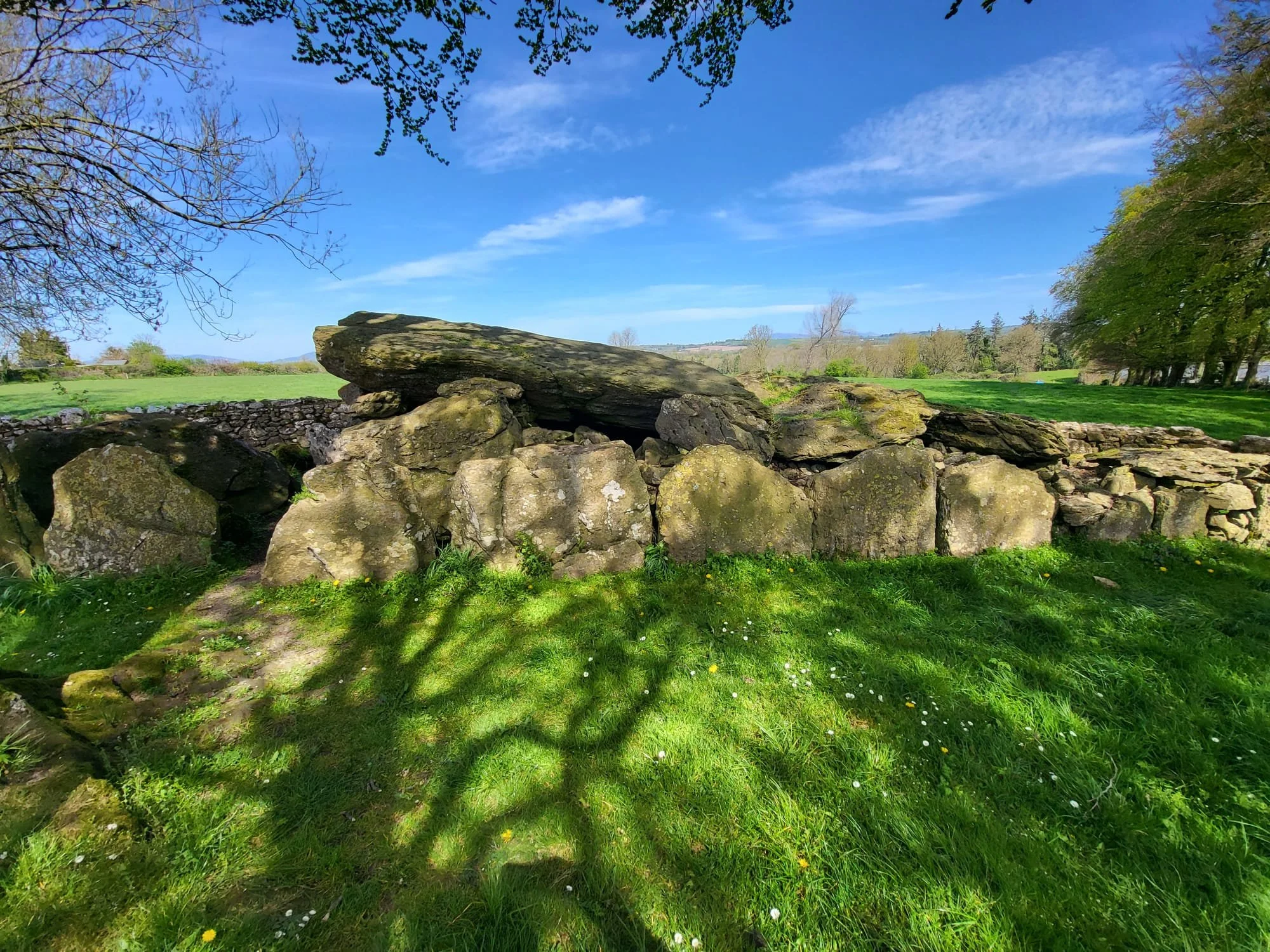
Side profile of Labbacallee wedge tomb
As with many of Ireland’s prehistoric structures, rather than being found on some remote lake island or buried beneath a tangle of woodland brush, an Leaba Caillighe (The Witches Bed), or Labbacallee as it’s now known, sits next to a main road. Driving from Dublin to Glanworth, part of the Blackwater Valley region, County Cork, you’ll find the tomb in a field on your right, behind a dry-stone wall. A hip-high information board marks the site on the roadside of the stone wall, but that is all. Blink, and you’ll miss it.
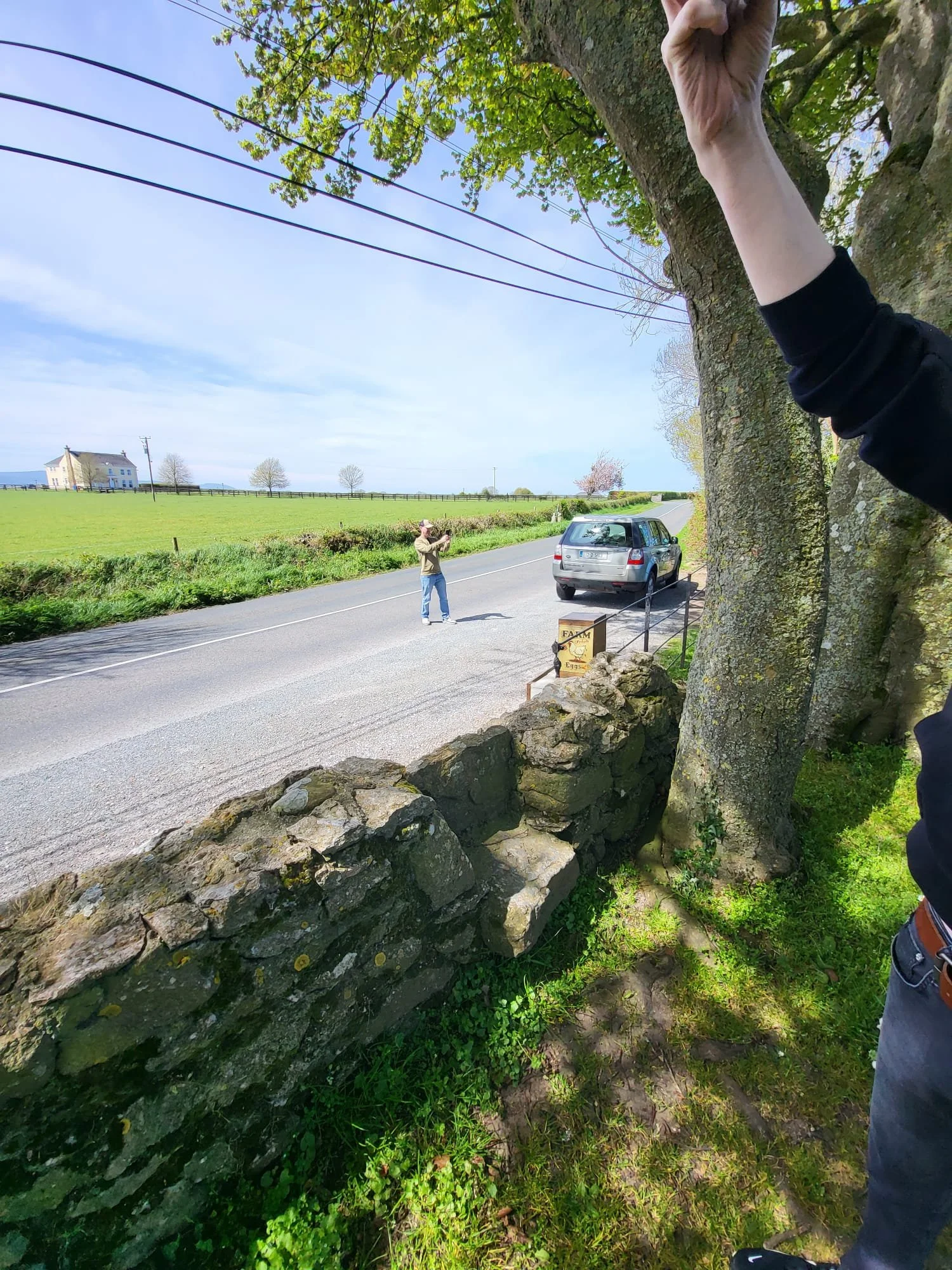
Labbacallee is next to the regional R512 road
Mythology
It’s not to say this ancient wedge tomb wasn’t once choked in a forest undergrowth long cleared by a farmer’s hand, or that it isn’t worth a visit. However, if you do go there, be warned, like the name suggests, it is the resting place of a malevolent witch, at least according to local lore. The witch is possibly a reinterpreting or retelling of a far older hag-goddess belonging to Celtic mythology. But like most good mythology, it contains at least a grain of truth because archaeological excavations carried out on the site during the 1930s uncovered human bones, and the separated skull of a woman. Archaeologists believe these remains belong to a noblewoman buried at the site over 3,000 years ago.
The history of the megalithic builders passed orally from generation to generation, and until recently, the site was thought to be the work of giants or magic.
Construction
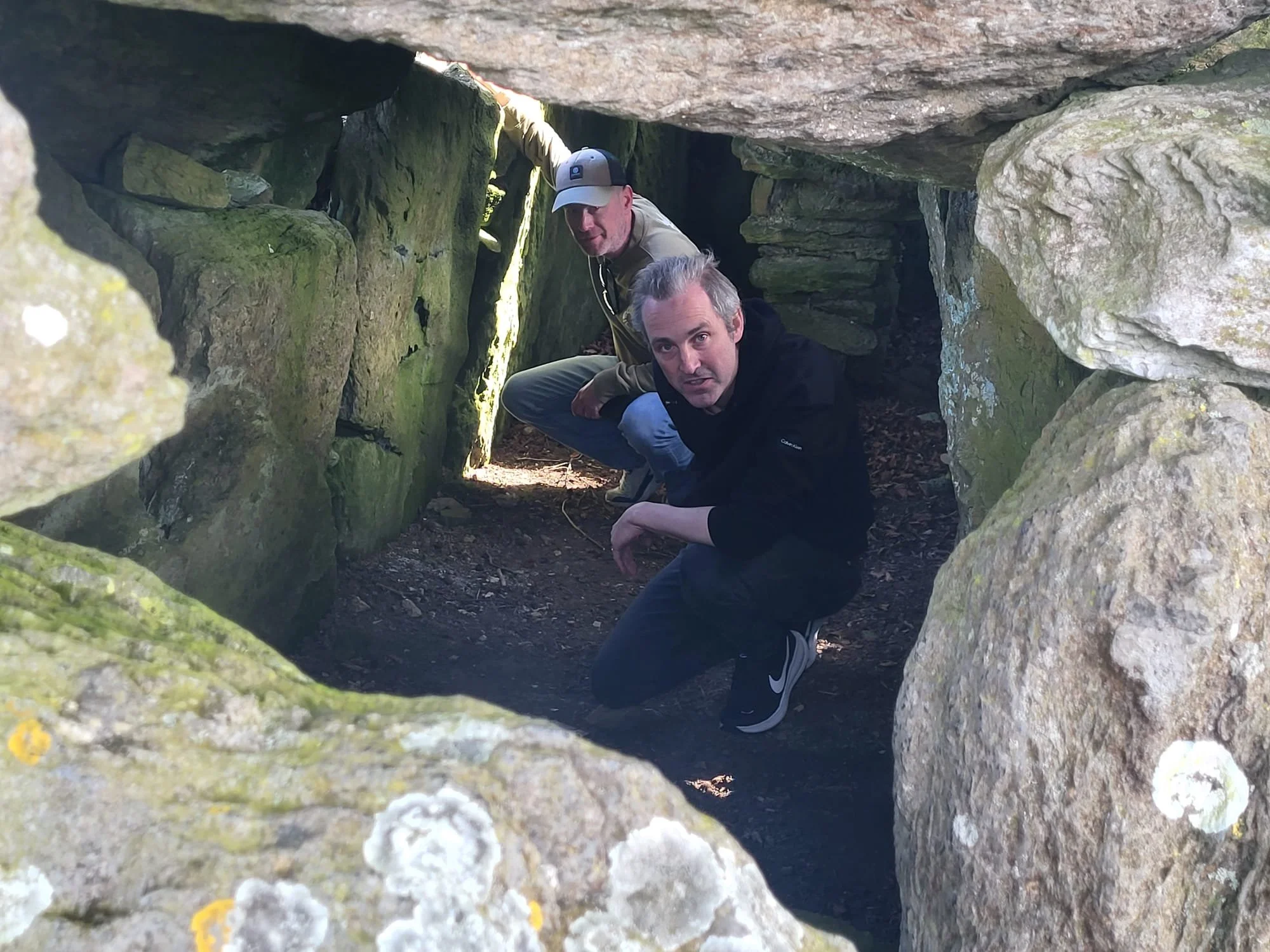
A look inside the tomb from the front
The tomb was built over 4,000 years ago, between the end of the Stone Age and the beginning of the bronze age. It was constructed using local limestone. Here rows of massive stones were placed upright before being covered by 3 even greater cap stones, creating a short passage and burial chamber. The largest capstone is 7.8 meters long and weighs over 10 tonnes.
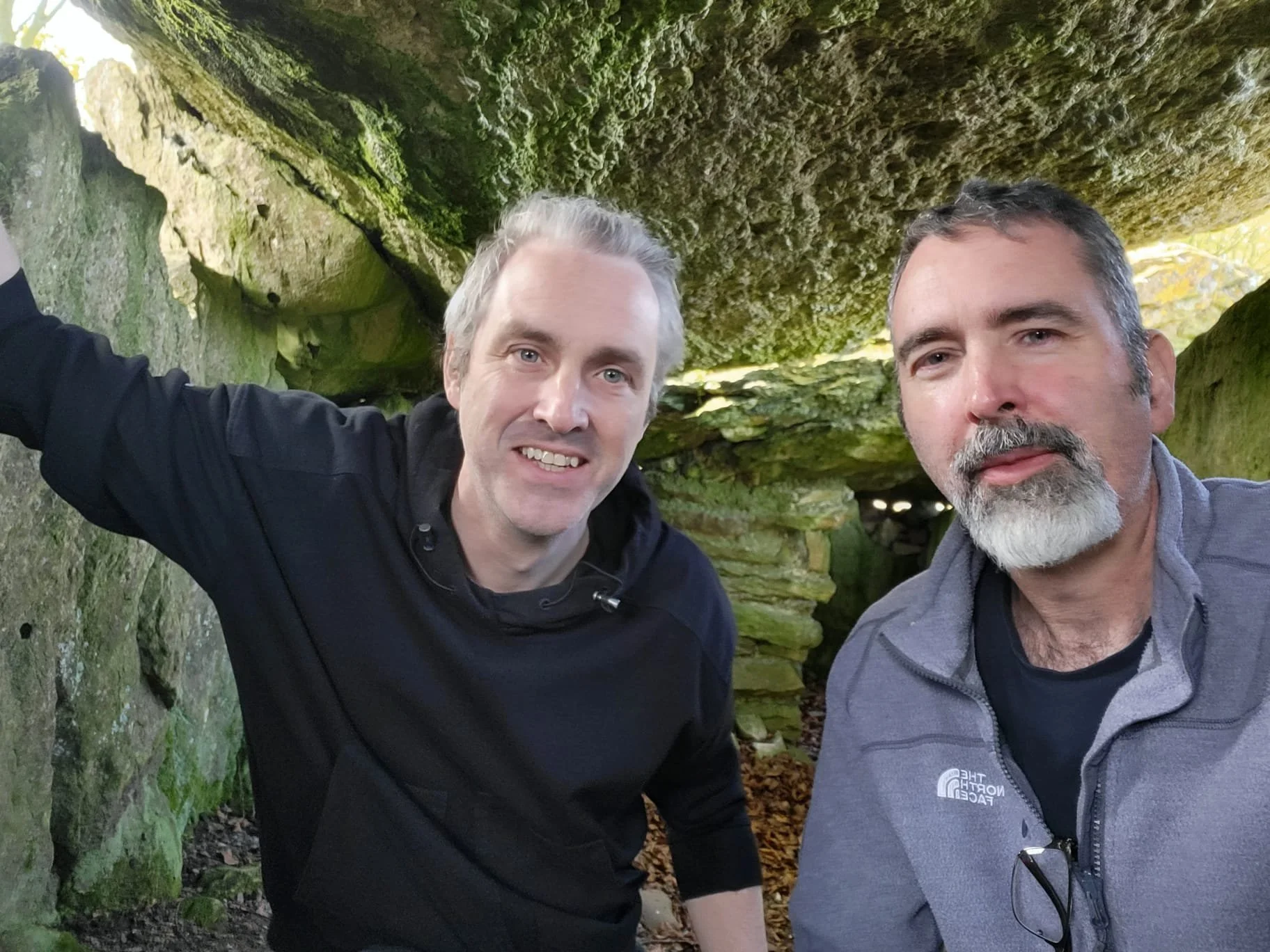
Labacallee is classified as a wedge tomb, a style of ancient Irish tomb building dating back to the megalithic era, because, as the name suggests, it is wedge shaped, and tapers in both height and width from the front to its back.